
When the temperature drops, most people reach for an extra blanket. What they often overlook is how much of that cold is actually coming through their windows. Glass is a notoriously poor insulator, and standard curtains do very little to combat heat loss, particularly in older homes where windows are single-glazed or poorly sealed.
The right winter curtains change that entirely. They create a thermal barrier between your living space and the cold outside, reduce draughts, and add a layer of comfort to your home that you can both feel and see. This guide covers what to look for in winter curtains, which styles and fabrics perform best in the cold months, and how to get a result that is as practical as it is beautiful.
Why Your Curtains Matter More in Winter
Most heat loss in a home happens through the walls and roof, but windows account for a surprisingly significant portion of thermal inefficiency. A single-pane glass window can lose heat at a rate several times greater than an insulated wall of the same size. Even double-glazed windows benefit enormously from a well-fitted curtain that traps a layer of still air between the glass and the fabric.
Beyond insulation, winter curtains serve another purpose that often goes unappreciated. They block draughts. Even windows that are technically closed allow cold air to seep in around the frame, particularly in older homes. A floor-length curtain that sits close to the wall and extends past the window frame on all sides dramatically reduces the draught effect, which makes a room feel warmer without any change to the thermostat.
The psychological effect is also real. A room dressed with rich, full curtains in warm tones or heavy fabrics simply feels warmer. Interior decorators have known this for years, and it is one of the simplest ways to shift the mood and comfort of a space during the colder months.
What Makes a Curtain Suitable for Winter
Not all curtains are built for warmth. The difference lies in three key factors: fabric weight, lining, and fit.
Fabric Weight and Texture
Heavier fabrics trap more air and provide better insulation than lighter ones. Velvets, chenilles, wool blends, and thick woven fabrics are among the best performing options for winter curtains. They also tend to drape beautifully, which adds to the overall look of the room.
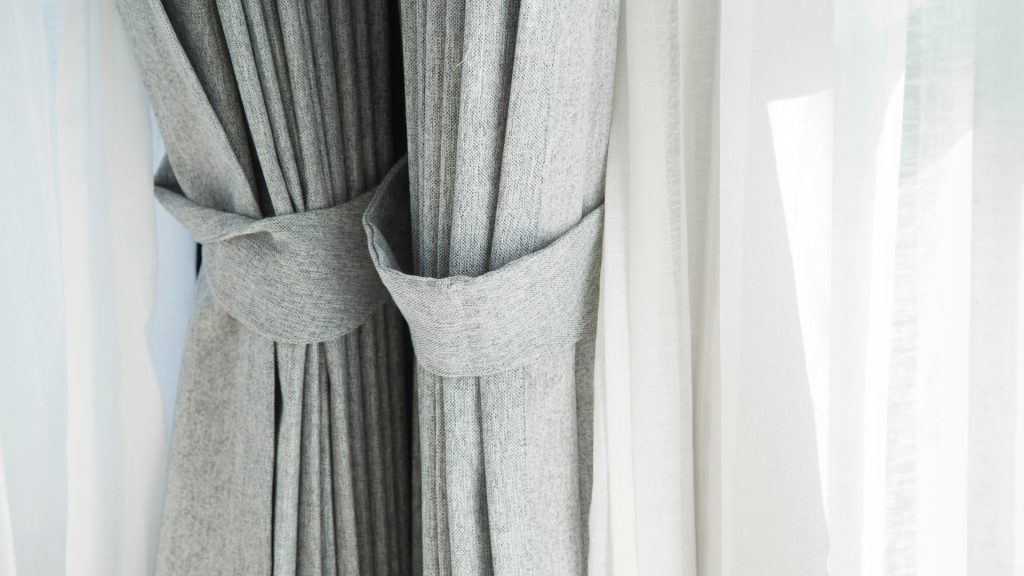
Lighter fabrics like sheers and linens are better suited to summer, where airflow and light diffusion are the priority. If you love the look of a sheer layer, pairing it with a heavier blockout or lined curtain behind it gives you the best of both worlds: soft filtered light during the day and genuine insulation when the panels are drawn in the evening.
Lining and Interlining
A lined curtain is significantly warmer than an unlined one. The lining creates a barrier that reduces heat transfer through the fabric and also protects the outer curtain from sun damage and fading over time.
Interlined curtains go one step further. Interlining is a thick, soft layer inserted between the face fabric and the lining, adding bulk and warmth without changing the external appearance of the curtain. It also makes curtains hang beautifully, giving them that full, luxurious drape that is the hallmark of a high-quality window treatment.
Fit and Coverage
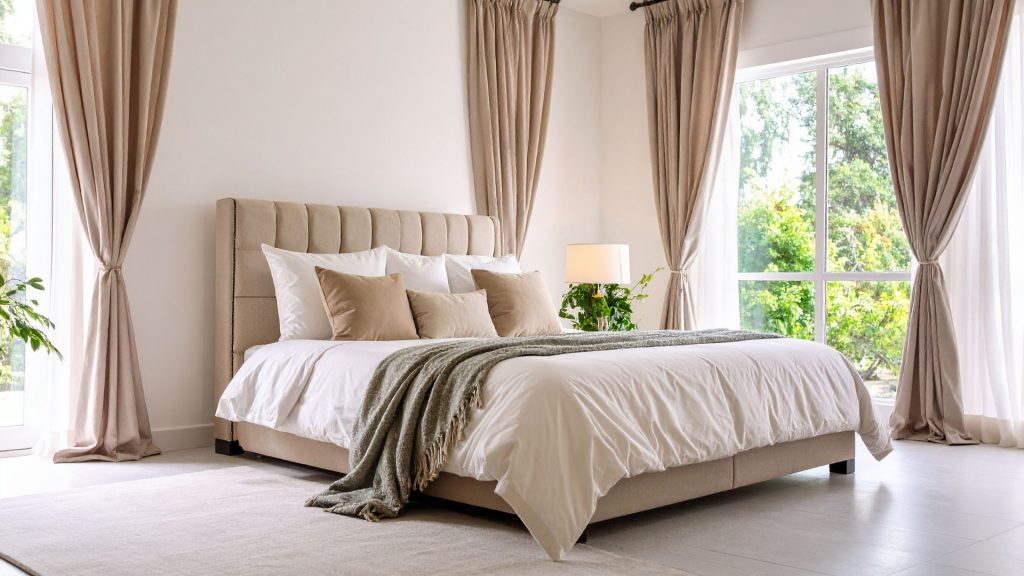
A winter curtain that does not fit the window correctly loses most of its insulating benefit. Curtains that are too short, too narrow, or hung too close to the window frame allow cold air to circulate around the edges. For maximum warmth, curtains should extend at least 15cm beyond the window frame on each side, be hung as high as possible to create the illusion of height and trap warm air near the ceiling, and reach the floor or sit just above it with a slight break.
Custom-made curtains solve this immediately because they are cut to the exact dimensions of your windows rather than adapted from a standard size. Lifestyle Blinds offers custom curtains made to measure for any window shape or size, ensuring a fit that works both aesthetically and functionally.
Curtain Styles That Work Well in Winter
The style of curtain you choose affects how well it insulates, how it looks, and how easy it is to operate day to day.
Pinch Pleat Curtains
Pinch pleat curtains are one of the most traditional and enduringly popular styles for good reason. The pleated header creates deep, structured folds in the fabric that stack beautifully when the curtain is open and provide excellent coverage when closed. The fullness of a pinch pleat curtain means there is more fabric per metre of window, which translates directly to better insulation.
Lifestyle Blinds’ two pinch curtain range uses hand-sewn woven buckram tape for a classic, structured fold that holds its shape wash after wash. For a more contemporary feel, pinch pleats can also be combined with ripple tracks for smooth, effortless operation.
Eyelet Curtains
Eyelet curtains have a relaxed, contemporary feel that works well in modern interiors. The rings allow the curtain to slide easily on a pole and create soft, rounded folds. For winter, choosing an eyelet curtain in a heavier fabric with a thermal lining gives you the modern aesthetic without sacrificing warmth.
Lifestyle Blinds manufactures eyelet curtains using premium eyelet tape with corrosion-resistant eyelets, making them equally suitable for coastal properties where salt air would degrade lesser-quality hardware over time.
Ripple and Wave Curtains
Ripple or wave curtains use a connected runner system that creates perfectly consistent folds from top to bottom. This style has become increasingly popular in contemporary interiors because it looks impeccably neat both open and closed. The uniform folding also means the fabric is distributed evenly across the window, with no gaps or thin patches that would compromise insulation.
Goblet Curtains
For formal living spaces and bedrooms where a sense of luxury is the goal, goblet curtains deliver a dramatic, gathered pleat at the top that creates a rich, structured look. Paired with a heavy fabric and full lining, goblet curtains are among the most effective winter options for rooms where both warmth and elegance are priorities.
Colour and Fabric Choices for Winter
Winter interiors tend to benefit from warmth in both temperature and tone. Deep colours like navy, forest green, burgundy, terracotta, and charcoal work exceptionally well on winter curtains. They anchor a room visually and complement the natural shift in light during the colder months.
That said, winter curtains do not have to be dark. Warm neutrals like camel, taupe, stone, and cream in a heavy fabric achieve the same effect with a lighter, more versatile palette that transitions easily between seasons.
Texture matters as much as colour in winter interiors. A plain linen feels very different to a velvet or a woven fabric even if the two are the same colour. Choosing something with texture adds visual depth and contributes to the sense of warmth in a room.
Combining Curtains with Blinds for Maximum Insulation
One of the most effective ways to insulate a window in winter is to layer your window treatments. A blind fitted close to the glass provides a first line of defence against heat loss, and a curtain drawn over the top creates a second barrier that traps a pocket of warm air between the two layers.
Lifestyle Blinds supplies both curtains and a full range of interior blinds, which makes it practical to design a layered window treatment as a complete solution rather than piecing it together from different suppliers. You can explore the full blinds range to find an option that pairs well with your chosen curtain style.
Getting Your Winter Curtains Right
The most common mistake people make with winter curtains is underestimating the impact of professional measurement and installation. A curtain that is cut two centimetres too short, hung on a rail that sits too close to the wall, or made from a fabric that looks different in natural light than it did in the showroom can be a frustrating and expensive outcome.
Lifestyle Blinds offers a consultation service that takes the guesswork out of the process. Whether you are dressing a single bedroom window or multiple rooms throughout your home, the team works with you to select the right fabric, style, and fitting for each space.
Reach out via the contact page to book your free consultation, or visit them in Hennopspark, Pretoria at 25 Jakaranda Street. You can also call on 012 653 1605 to discuss your requirements before committing to anything.
Final Thoughts
Winter curtains are one of the highest-impact changes you can make to a home during the cold months. They improve thermal comfort, reduce draughts, lower heating costs, and completely transform the look and feel of a room.
The key is choosing the right fabric, the right style, and a fit that genuinely covers the window rather than just decorating it. Done properly, winter curtains are something you will appreciate every morning when you walk into a room that held its warmth overnight.
Browse the full curtain range at lifestyleblinds.co.za and get a quote tailored to your home.